


Exhibition
Hybrid Vistas
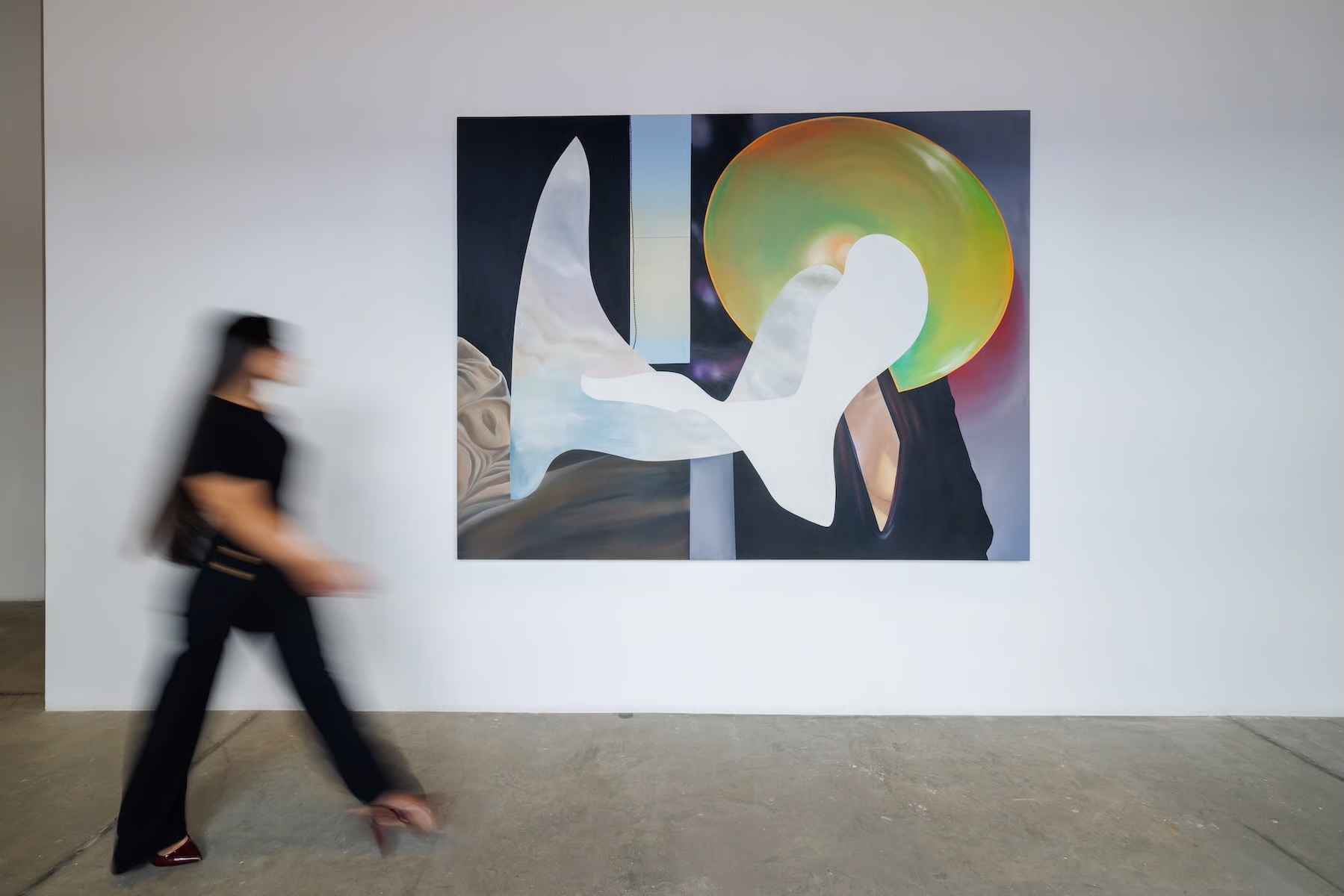
INSTALLATION VIEW “Hybrid Vistas”, 2025. Courtesy of the Artist and NIKA Project Space.
Hybrid Vistas explores how landscape is transformed in an age of post-human thought, climate disruption, and hybrid perception.
Painting becomes a tool whose boundaries are pushed, stretched, and even dismantled: landscape appears not as a stable view of nature, but as a dream, an algorithm, a bodily projection, or a fantasy of machine consciousness. It unfolds in a space where nature is no longer “natural” but imagined—artificially assembled, re-experienced through code, memory, and mediated vision. In this shifting condition, landscape becomes what Timothy Morton calls a hyperobject: dispersed, fragmented, and too vast or unstable to grasp in its entirety.
Within this framework, painting occupies a central position. It is no longer a classical window onto the world but a field of experimentation- testing optics, materiality, the speed of perception, and new ways of reconstructing nature. In the hands of the artists, the painterly gesture becomes an interface, an algorithm, a method of pursuing an image that now continually slips through digital flows.
Amid this fractured, accelerated attention, characteristic of contemporary visual culture, painting gains new urgency. It engages not with nature as a fixed entity but with its media traces: dissolutions, delays, pixelated afterimages, and what Jean Baudrillard would describe as simulacra of the landscape — images that exist independently of any original reality.
Melissa Rios, whose large painting greets visitors to the exhibition, brings together surreal, almost dreamlike visions in her work, where figures, objects, and abstract forms layer and interact, forming multi-layered compositions that connect different levels of experience. Emotionally charged and deeply introspective, her paintings explore the space between the physical and the metaphysical, between what is imagined and what is lived.
Iranian artist Ali Kaeini examines themes of displacement and historical identity. Using recognizable images, motifs, and colours of Iranian architecture as a foundation, he creates complex geometric structures intertwined with organic spiral forms. Moving away from traditional painterly techniques, Kaeini develops his own approach, shifting our understanding of what a painting can be. He shows that the principle of collage can operate even within a traditional painterly language, giving each canvas its own landscape and boundaries.
Katya Muromtseva’s abstract work from her new project No Such Thing As Day and Night serves as an example of art that is not tied to narrative, but instead lives through its own material and form. Here the artist disrupts the usual rhythm of narration. The paintings emerge through action itself, the viewer is not led through a story but drawn into presence, into an invented language that arise not from from random gestures but from Muromtseva’s heightened sensitivity to current events: the ongoing wars, polarised political reality, and collapse of communication make it impossible to find adequate images for depicting our environment, transforming it into abstract formations of black patches and shifting chromatic tones.
Daniele Genadry’s practice is not grounded in specific sites, though one might assume echoes of Lebanese terrain. The space of light and emptiness that permeates her work produces visual uncertainty: we look not at a landscape but at a flash of light. Light becomes the central subject rather than any figurative motif. This is a treatment of light sharply different from the Impressionists’ optics. Her world seems filtered, unreal, stripped of detail, more beautiful than reality, yet never an aestheticized illusion. In these paintings, Genadry pulls nature out of a techno-scientific regime of control and reveals its presence as an event that resists visual legibility. She attempts to grasp what escapes digital and optical registration — something only painting can hold.
The paintings of Adel Abidin offer a vision of hybrid space: a post-apocalyptic terrains where one can recognise the colours of sea, water, and horizon, connected to the landscapes of Iraq that formed his visual memory. At the same time, refracted through artistic imagination, these elements become a symbols of a broader global experience of decay, migration, and loss.
The exhibition invites viewers to approach landscape as a site of pictorial experiment, where nature is no longer a given but an act of assembly, a dynamic reconstruction shaped by perception, technology, and the multiplicity of our contemporary gaze.
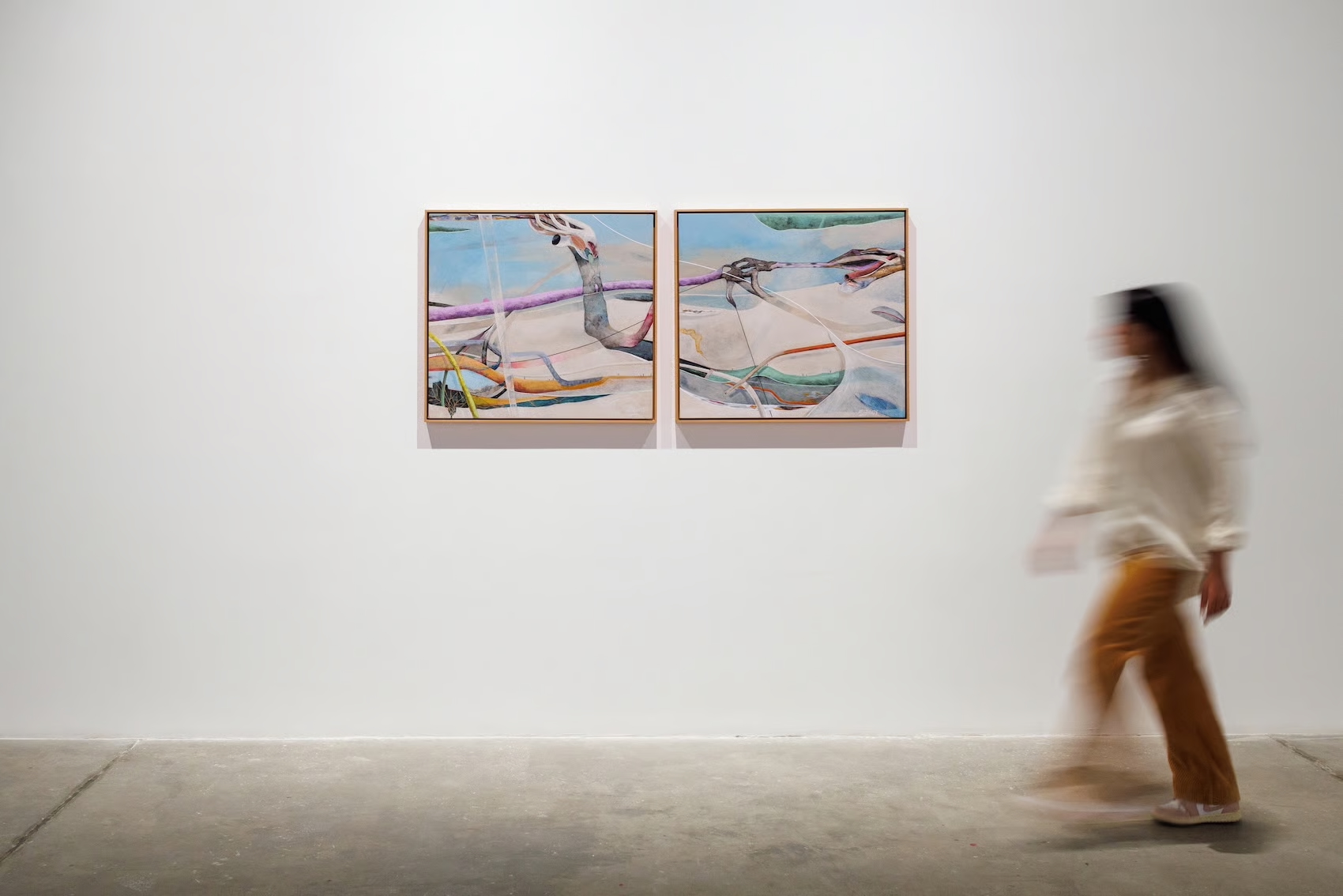
INSTALLATION VIEW “Hybrid Vistas”, 2025. Courtesy of the Artist and NIKA Project Space.
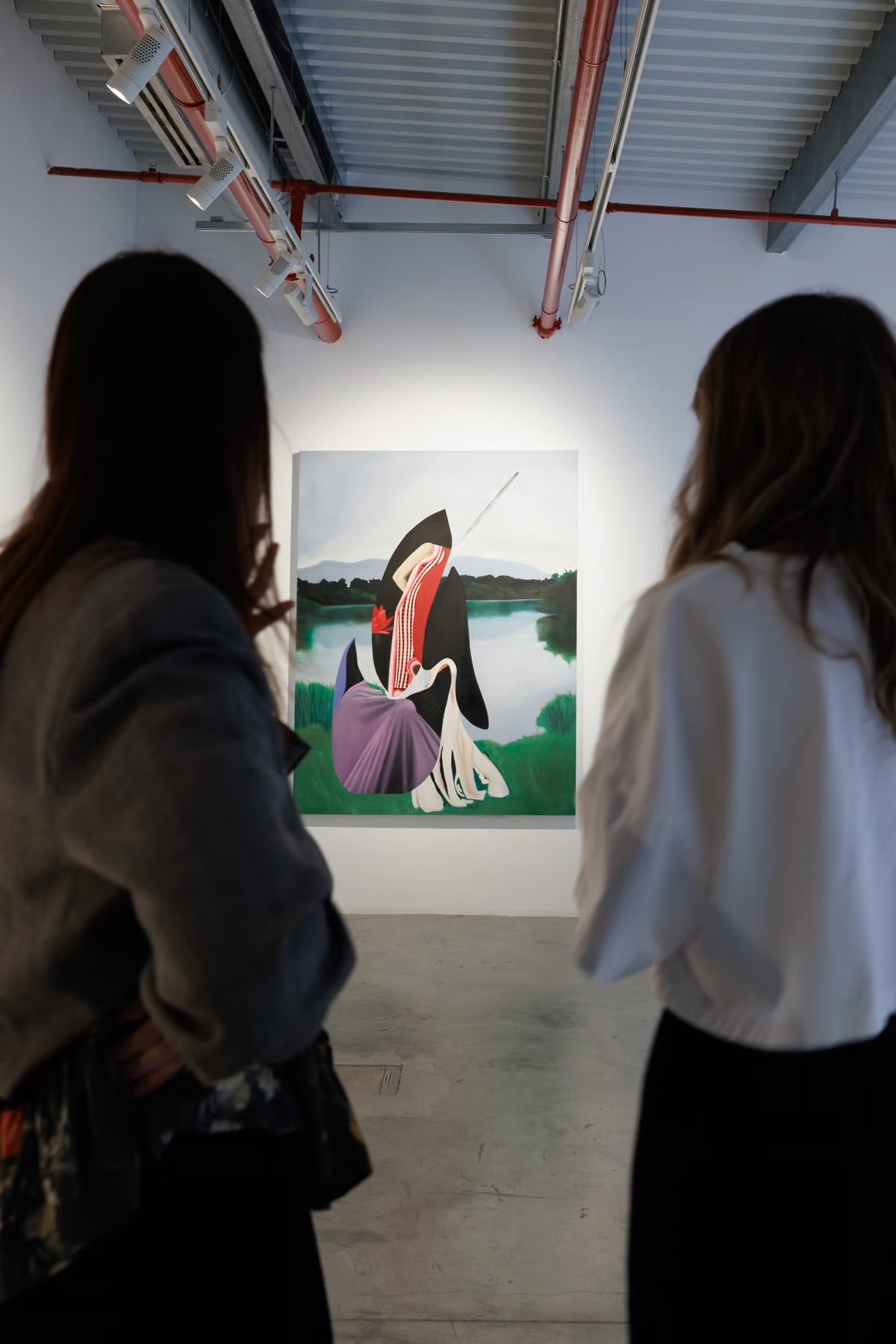
INSTALLATION VIEW “Hybrid Vistas”, 2025. Courtesy of the Artist and NIKA Project Space.
2025. 11. 25. (Tue) – 2026. 02. 07. (Sat)
NIKA Project Space