


Exhibition
20/20
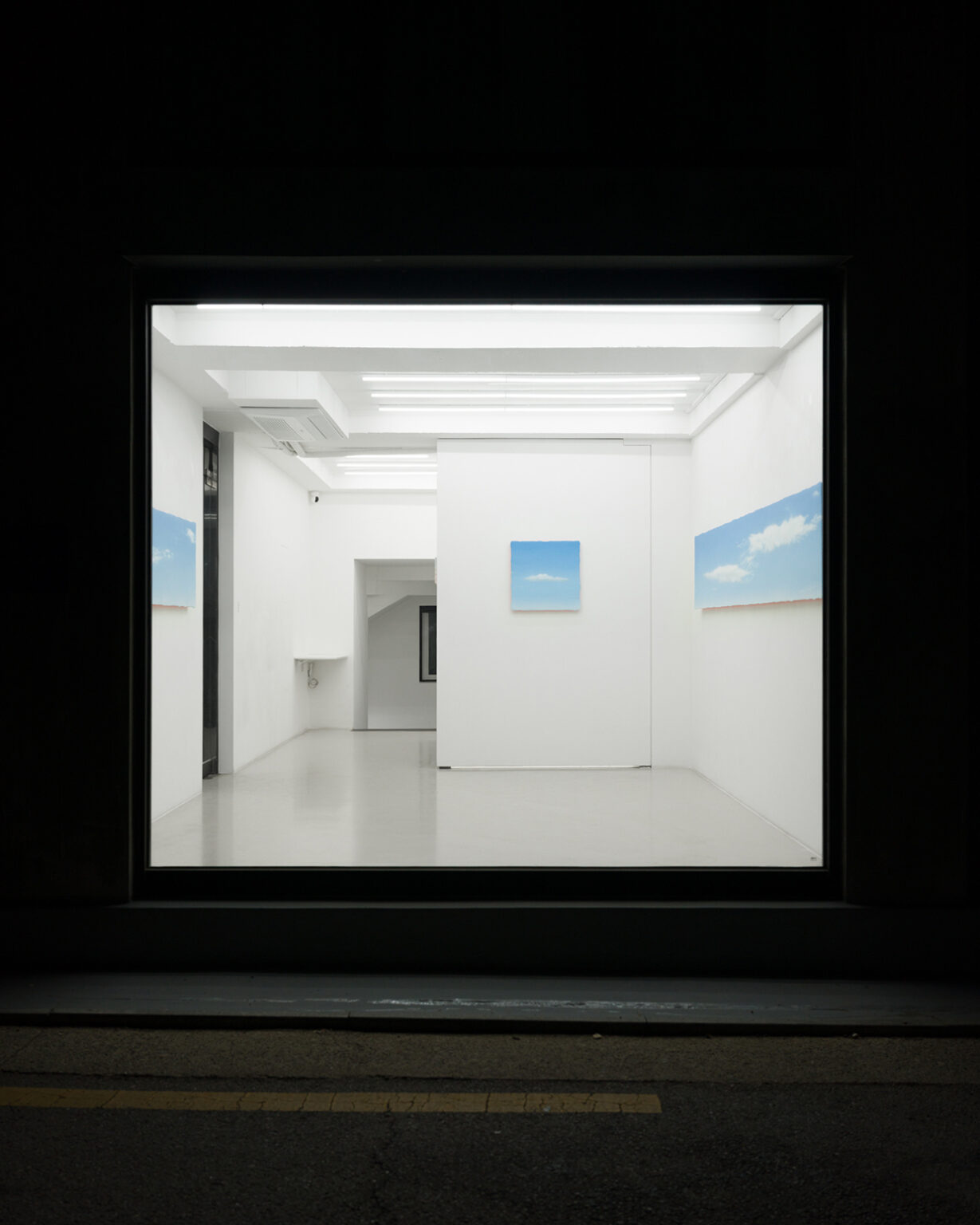
INSTALLATION VIEW “20/20”, 2026. Courtesy of the Artist and ThisWeekendRoom.
As the day wanes, night falls. Night passes and dawn breaks. Certain things become clear only over time. There are moments when something is perceived as a completed stratum only after stepping back from the center of an event. Seongjoon Hong draws on this cognitive mechanism, translating it into painting and visualizing the delayed clarity of perception through his own formal language. The exhibition title, 20/20, denotes normal eyesight, while also evoking a journey of confronting the past within a temporal delay and recalibrating the focus of memory.
Hong’s work begins with the act of documenting everyday life through photography. Moments captured by the lens are, through his selective process, carried onto the canvas as either sharply defined forms or blurred fields of color. What is particularly compelling is that specific narrative elements are systematically eliminated in this process. He intentionally erases the forms of figures and objects, as well as the spatiotemporal traces that once anchored his personal emotions, whether from family trips or fleeting encounters with everyday landscapes. This operates as a strategic device for articulating differing resolutions of memory within a single pictorial plane: images that rise vividly to the surface of consciousness coalesce into distinct forms, while those that recede into the depths of forgetting dissolve into hazy, atmospheric color. Furthermore, paint applied with an airbrush subtly articulates spatial depth, delicately distinguishing foreground from background.
Into the void left by the disappearance of various elements, universal manifestations of nature emerge, such as clouds and ripples, the density of air, and the quality of light. The sky and the sea are intimate landscapes rooted in the artist’s own experience, while also alluding to the twenty four hours of time granted equally to all. Within a world bound by a single horizon, each individual carries their own share of stories. In this sense, his canvas functions as both a mirror reflecting the viewer’s inner landscape and as a window through which personal desires and emotions may be projected. On an orbiting planet, one person’s dawn is another’s afternoon. The canvases, shifting through a spectrum of color, suggest a temporal field without constraint, even evoking the sense of a parallel universe. In this way, Hong’s painting becomes an unfolding screen for sensing the time to come, rather than a fixed monument that points to the past. Perhaps this is an attempt to step back behind the vast order of nature, rather than directly articulating the events he has experienced.
The focal point of this exhibition is the dark night sky, introduced into the artist’s work for the first time. Previously, his paintings functioned as a kind of convex lens infused with the hues of the surrounding environment, capturing a clear and luminous world without distortion. By contrast, the newly introduced nocturnal spheres (After the Light) operate as a mediating presence that turns away from what surrounds them rather than rendering it with clarity. This shift may reflect a quiet resolve to withhold certain things from view, or perhaps a willingness to recalibrate the lens through which he sees. The units of time, repeatedly falling out of alignment under the force of life’s inevitabilities such as encounters and departures, birth and death, extend into a sense of the world’s multidimensionality. This is felt in the rhythm between the paintings, which breaks and reconnects like a pulse, as well as in the subtle fluorescent aura that shimmers beneath their surfaces. Meanwhile, although time may come to a halt for some in the physical world, it continues to flow within those who remain. Beyond the dense veil that appears empty at first glance, countless presences reside. Things that have slipped from sight, yet persist unmistakably. By enlarging the illusion on the surface of a bubble, Hong evokes those unseen presences that nevertheless linger close at hand. It is darkest just before dawn.
TextㅣYoojin Lee (Curator, ThisWeekendRoom)
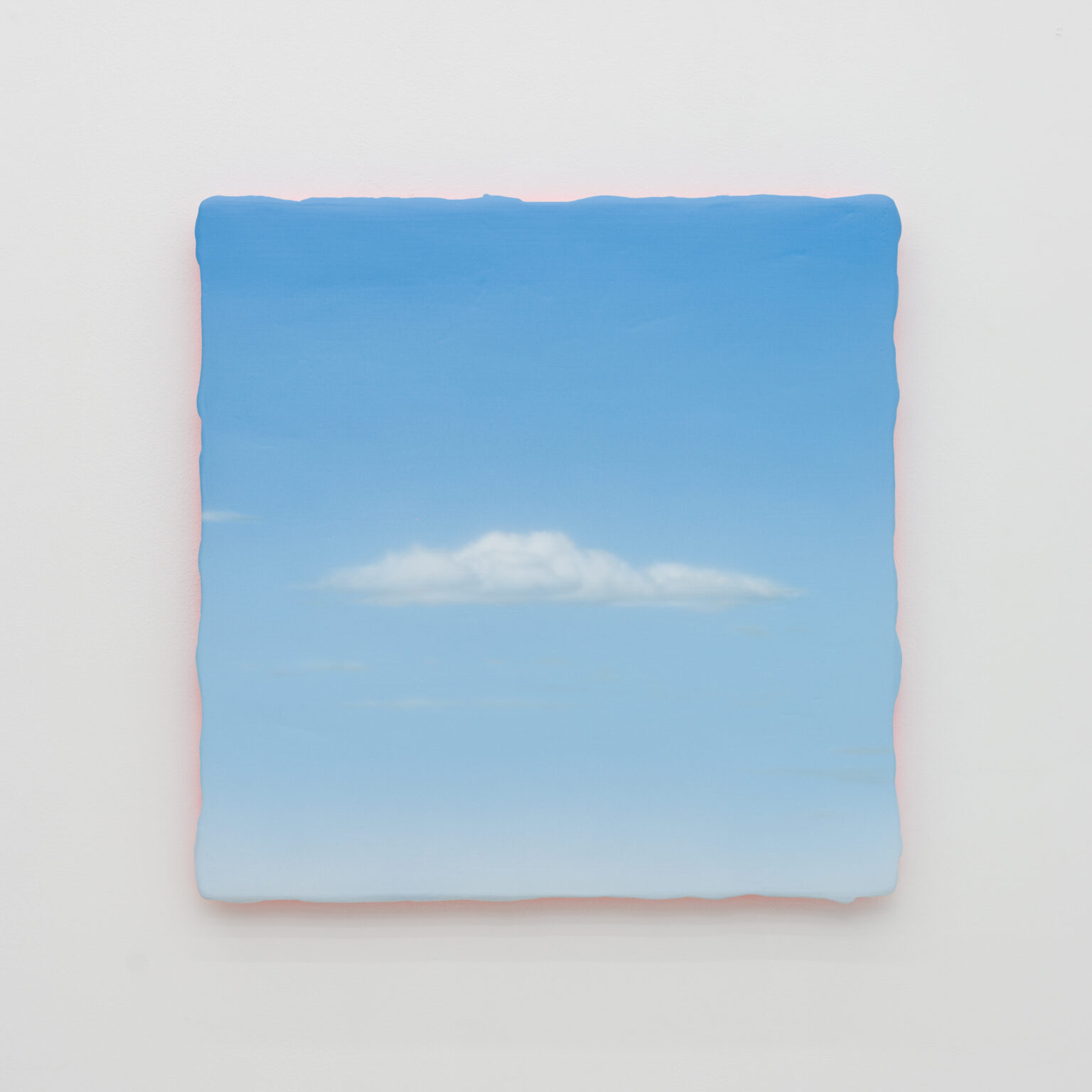
INSTALLATION VIEW “20/20”, 2026. Courtesy of the Artist and ThisWeekendRoom.
낮이 저물어 밤이 온다. 단연 밤이 지나 동이 튼다. 그리고 어떤 일은 세월이 지나고 나면 분명해진다. 사건의 한복판에서 한 발짝 물러섰을 때 비로소 완결된 층위로 지각되는 순간이 있다. 홍성준은 이러한 인지적 메커니즘을 회화로 끌어와 시차를 두고 발생하는 인식의 선명도를 자신만의 조형적 언어로 시각화한다. 전시의 제목인 ‘20/20’은 정상 시력을 지칭하는 동시에 지연된 시간 속에서 과거를 직시하고 기억의 초점을 다시금 맞추어 나가는 여정을 내포한다.
작가의 작업은 일상을 사진으로 기록하는 행위에서 출발한다. 렌즈에 포착된 순간들은 그의 선택에 따라 선명한 형상과 흐릿한 색면으로 구분되어 캔버스 위로 옮겨진다. 흥미로운 지점은 이 과정에서 특정 서사적 요소들이 철저히 소거된다는 것이다. 그는 가족과의 여행이나 무심코 지나친 풍경 속에서 느낀 개인적 감정의 진원지였을 시공간의 흔적, 인물이나 사물의 형태를 의도적으로 지운다. 이는 단일한 화면 안에 기억의 해상도 차이를 구현하기 위한 전략적 장치와도 같은데, 의식의 표면으로 강렬하게 떠오른 대상은 또렷한 도상으로 맺히고 망각의 기저로 흩어지는 대상은 안개처럼 부연 색채로 물러나는 식이다. 더구나 에어브러시라는 기계적 도구를 이용해 분사된 안료는 전경과 후경의 원근을 섬세히 드러낸다.
그렇게 일련의 개체가 사라진 빈자리에는 구름과 파문, 공기의 밀도나 빛의 조도 같은 보편적인 자연의 표상들이 들어선다. 하늘과 바다는 작가 자신에게서 비롯된 내밀한 풍경이자 누구에게나 공평하게 주어지는 24시간을 암시한다. 하나의 지평선 또는 수평선으로 이어진 세계에서 모두는 저마다 다른 몫의 사연을 짊어지고 있으므로, 그의 화면은 그것을 마주한 이의 내면을 비추어 볼 수 있는 거울이자 각자의 소망과 감정을 투영할 수 있는 크고 작은 창(窓)으로 기능한다. 공전하는 행성 위에서 누군가의 새벽은 다른 이의 오후다. 다양한 색조로 변화하는 캔버스는 아무런 제약 없는 시간대, 나아가 평행우주처럼 보이는 듯도 하다. 이에 홍성준의 회화는 과거를 지시하는 박제된 기념비가 아닌 다가올 날들을 감각하기 위한 현재 진행형의 스크린이 된다. 어쩌면 그가 겪은 사건을 직접적으로 쏟아내는 대신 거대한 자연의 섭리 뒤로 물러서려는 시도일지 모른다.
이번 전시의 주목점은 작가가 처음으로 화폭에 소환한 캄캄한 밤의 하늘이다. 본디 그의 작품은 풍색을 머금은 일종의 볼록렌즈로써 투명하고 밝은 세상을 가감 없이 담아내었다. 반면 새롭게 등장한 밤의 방울들(After the light)은 주변을 명징하게 비추기보다 도외시하는 매개로 작동한다. 이는 마땅히 무언가를 보지 않겠다는 다짐이거나, 감히 예상컨대 렌즈의 설정값을 기꺼이 바꾸어 보고자 하는 의지에서 비롯되었을 테다. 만남과 작별, 탄생과 죽음 같은 삶의 불가항력이 개입하여 자꾸만 어긋나는 시간의 단위는 그가 가늠하는 세계의 다차원성으로 이어진다. 이는 마치 맥박처럼 끊어졌다 이어지는 화면 간 리듬과 그 이면에 수놓인 형광의 아우라에서도 감지된다. 한편, 물리적 환경에서 어떤 이의 시간은 영원히 멈추었을지언정 남겨진 자의 마음속에서는 계속해서 흘러가기 마련이다. 언뜻 텅 비어 있는 듯한 짙은 장막 너머엔 실상 무수한 존재들이 도사린다. 비록 시야에서 가뭇없이 사라졌으나 반드시 그곳에 실재하는 것들. 그는 비눗방울 표면의 허상을 확대하며 보이지 않지만 분명히 곁에 머무는 것들을 떠올려 본다. 동트기 직전이 가장 어두움을 알기에.
글ㅣ이유진 (디스위켄드룸 큐레이터)
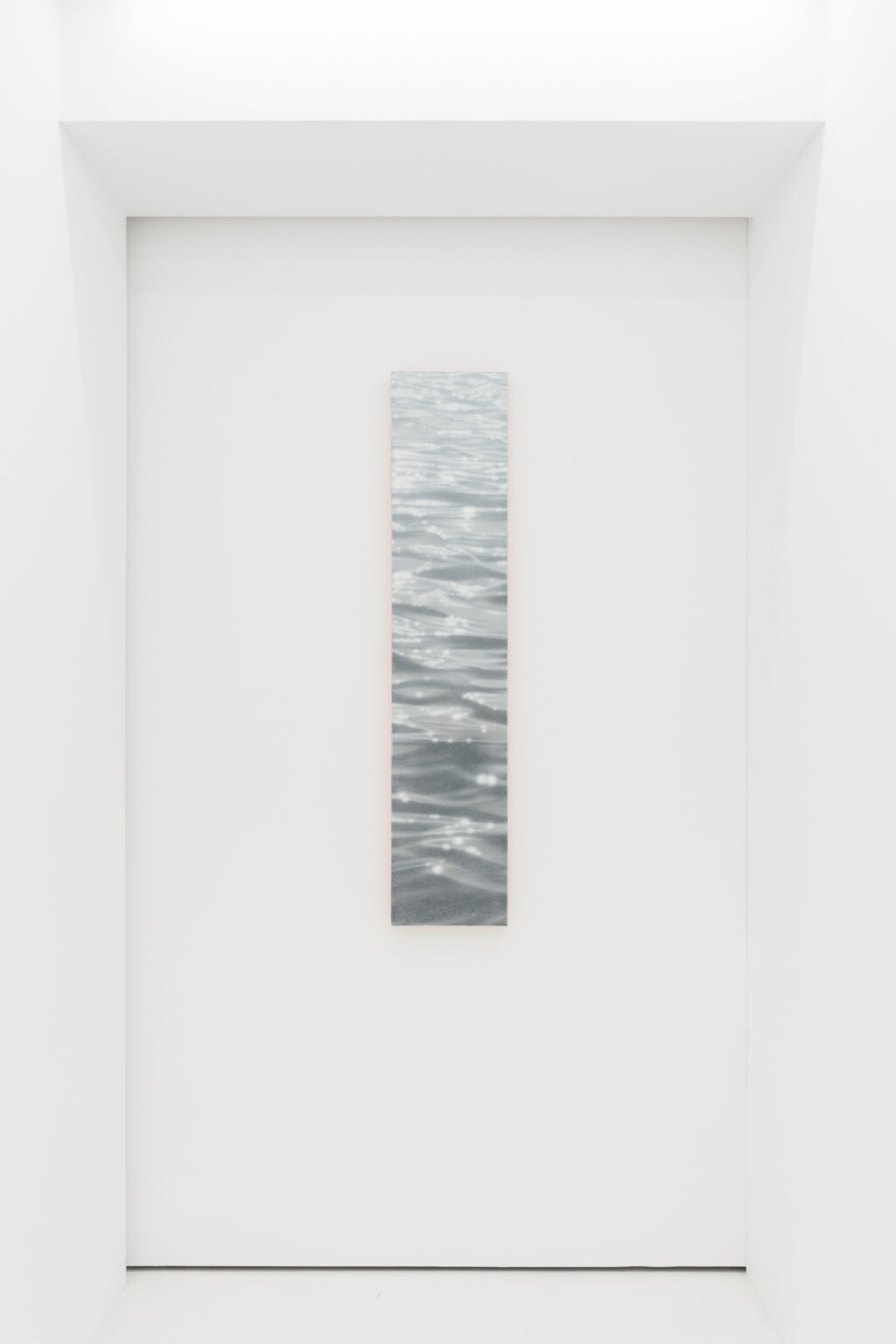
INSTALLATION VIEW “20/20”, 2026. Courtesy of the Artist and ThisWeekendRoom.
2026. 03. 28. (Sat) – 2026. 04. 30. (Thu)
ThisWeekendRoom