


Exhibition
Old Vessels, New Spirits
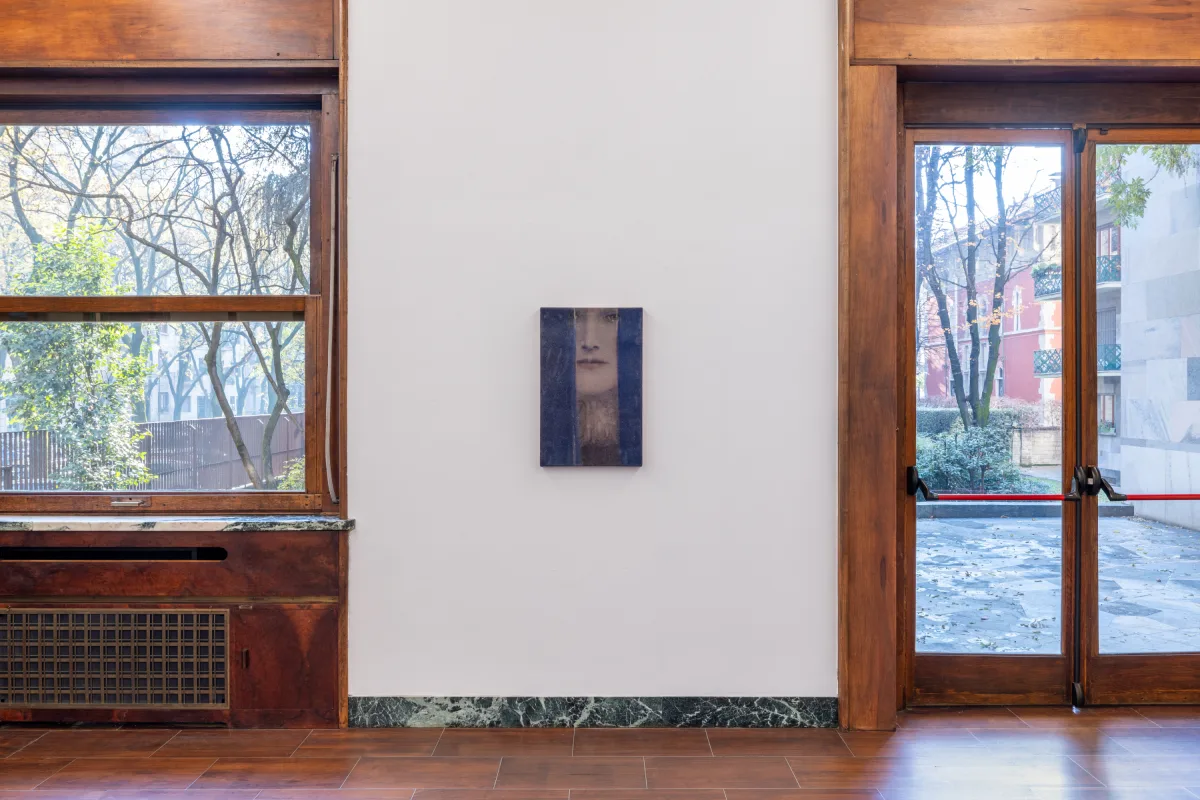
INSTALLATION VIEW “Old Vessels, New Spirits”, 2025. Courtesy of the Artist and MASSIMODECARLO.
MASSIMODECARLO is pleased to present Old Vessels, New Spirits, a group exhibition that brings contemporary artists into dialogue with figurative masters of the 19th and 20th centuries. The exhibition explores how historical forms persist as living frameworks for new expression and unexpected affinities.
The exhibition’s historical anchor includes works by Pierre Bonnard, Edgar Degas, Charles Despiau, Norbert Goeneutte, Antoine-Jean Gros, Winslow Homer, Albert Marquet, and Andrew Wyeth.
Bonnard’s Still Life with a Basket of Fruit (1930–35) turns a simple domestic scene into a study of perception. Degas’s Portrait of a Woman (c.1887–90) brings that intensity to the figure, where the shimmer of fabric and feather becomes psychological. Goeneutte’s In the Garden (c.1876) and Despiau’s Faun (modelled 1912, cast 1953) share that focus on presence: one through glimpses of Parisian life, the other through classical rigour. Gros’s The Citoyenne Poussielgue (1797) shows how fashion and gesture could define identity long before photography, while Wyeth’s Overflow Study (1978) transforms that idea of portraiture into something private and intimate.
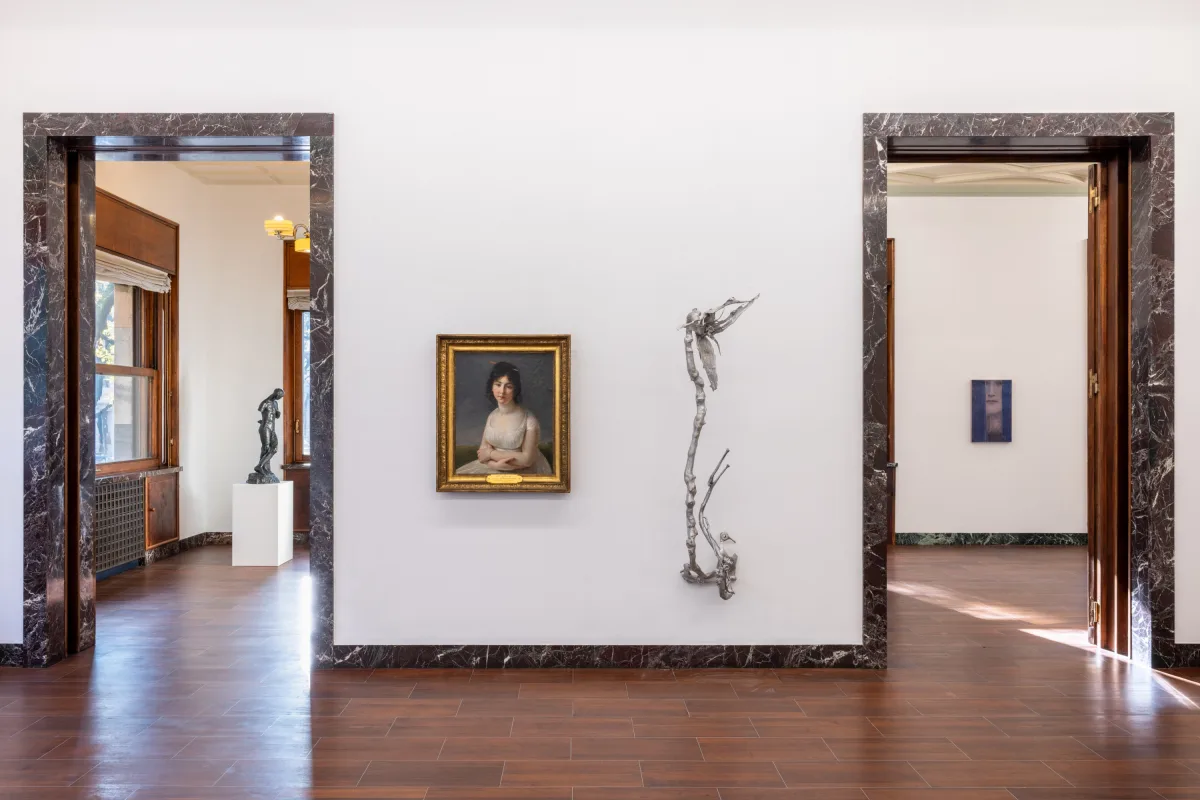
INSTALLATION VIEW “Old Vessels, New Spirits”, 2025. Courtesy of the Artist and MASSIMODECARLO.
Homer’s Light Blue Sea at Prout’s Neck (1893–94) and A Volante on a Mountain Road, Cuba (1885) expand the view – from Maine’s solitude to the brightness of Cuba – both shaped by the human confrontation with nature’s scale. Marquet’s View of Agay, the Red Rocks (1905) brings that vastness to rest, turning the sea into a moment of reflection.
While the historical works in the exhibition form the vessels – the structures, subjects, and habits of seeing inherited from the past – the contemporary ones provide the new spirits that inhabit them. The contemporary artists presented – Jean-Marie Appriou, Izzy Barber, Giulia Cenci, Nick Goss, John McAllister, Piotr Uklański, Chloe Wise, and Xue Ruozhe – work with the same enduring genres: portrait, landscape, still life, and sculpture. Yet they treat these not as fixed traditions but as porous systems, open to revision – containers for new emotions, contradictions, and ways of looking at the present.
Appriou’s The Briar Rose (rosa x centifolia) (2022) takes its cue from the mythic and botanical. A tangle of bronze, half flower, half apparition, its surfaces flickering between tenderness and ruin. Cenci’s slow flower (2025) works in a similar register of metamorphosis – aluminium branches, bones, and car parts welded into tense, searching anatomies.
Goss and Barber find their ground in the urban landscape. Goss’s Stations Part 1 (2025), Ostend Procession (2025), and March into the Sea (2025) translate the experience of travel – the passage between places and times – into compositions where fragments and transparencies accumulate like memory itself. Barber, by contrast, paints what’s right in front of her – Sledding (2025), Rockaway Winter Sun (2025), 4th of July, Highway 380 (2025), Manhattan Bridge (2025) – moments of American life glimpsed in motion. Her brushwork, brisk and luminous, makes the ordinary look fleeting and precise at once, like memory still wet. McAllister, on the other hand, approaches landscape differently, allowing radiant colour and patterned space to convey its sensory intensity rather than its literal trace.
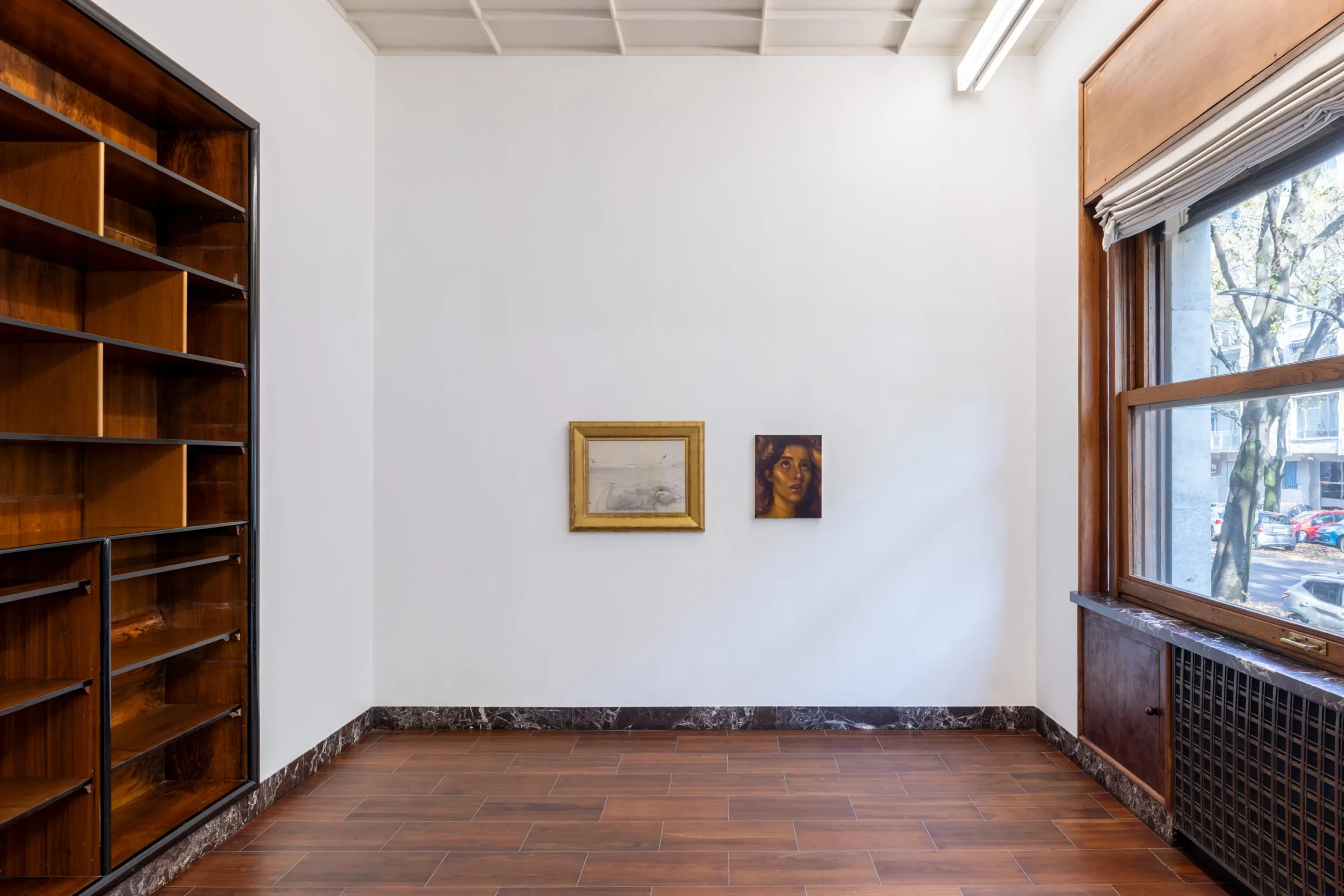
INSTALLATION VIEW “Old Vessels, New Spirits”, 2025. Courtesy of the Artist and MASSIMODECARLO.
If Goss, Barber and McAllister trace the external world, Uklański, Wise, and Ruozhe look inward – to the ways images construct desire, selfhood, and reflection. Uklański’s Untitled (Marguerite Khnopff as Eurydice) (2021) resurrects a Symbolist muse with an edge of agency; her gaze, painted on mohair velvet, feels as soft as it is defiant. Wise’s Water is for Women (2025) plays a similar game with surface and sincerity – a portrait that flirts with the language of beauty. Ruozhe’s diptychs of floral still lifes 20250519–20250716 and 20250717–20250828 (2025) turn intimacy into a ritual. Each begins with a single layer of colour, then grows one flower at a time – blooming, fading, tracing days as they pass.
The works in Old Vessels, New Spirits suggest that art’s continuity lies in how certain gestures outlast their time. Each artist works within a form that has already lived many lives, yet still carries the potential for another. The still life, the portrait, the myth, the body – all return as open questions. In this sense, the exhibition is less about the inheritance of a visual language than its renewal through new spirits: the moment when an image changes hands, shifts in meaning, and becomes, once again, a beginning.
Old Vessels, New Spirits has been organised in collaboration with the New York–based dealership Wildenstein & Co.
2025. 11. 25. (Tue) – 2025. 01. 10. (Sat)
MASSIMODECARLO (Milano)