


Exhibition
Koen van den Broek, *The Skin of the Earth*
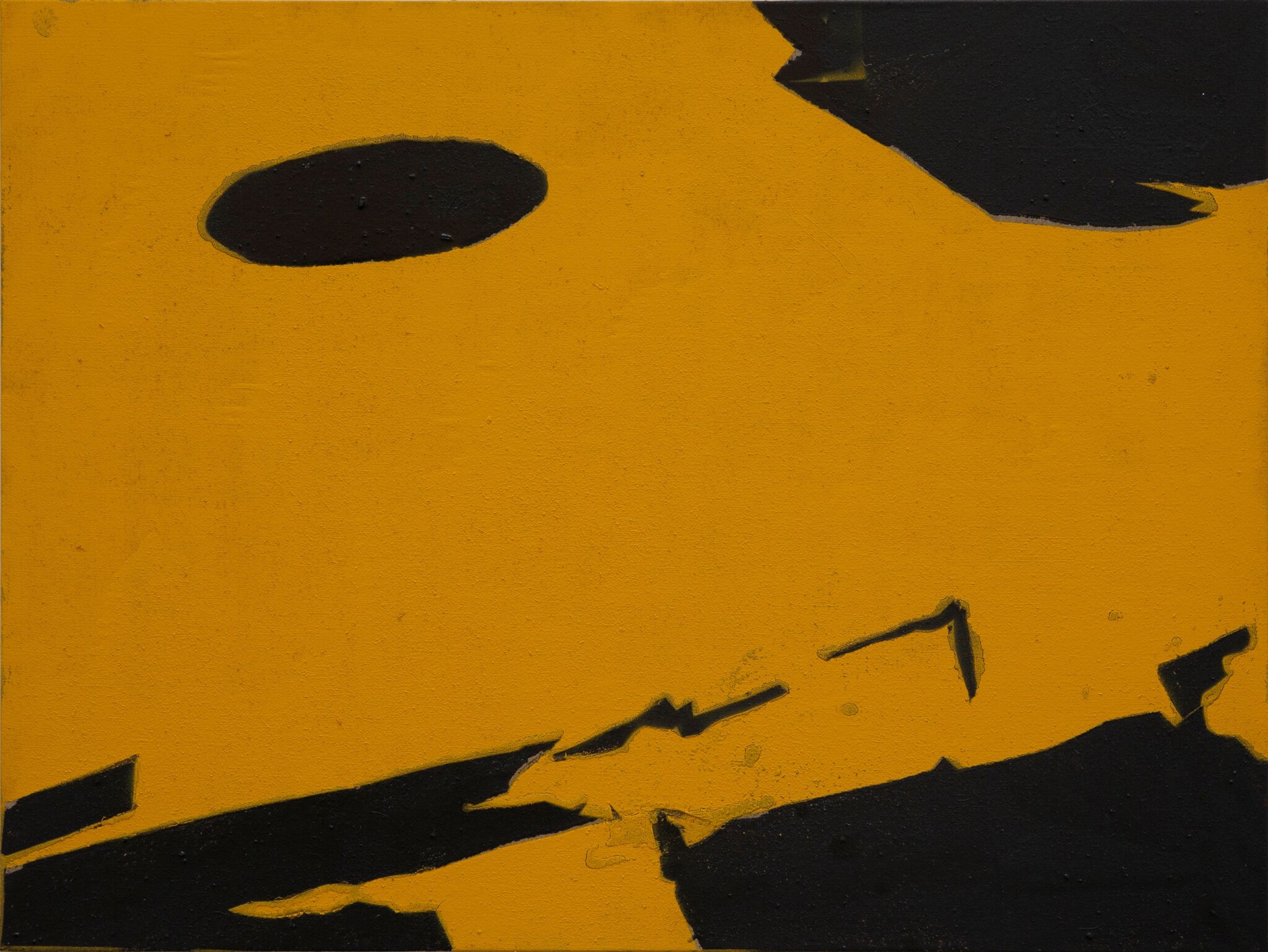
Koen van den Broek, V-Y, 2025, Traffic paint and tar on linen, 90 x 120 cm. Courtesy of the Artist and Jeonnam Museum of Art.
The Jeonnam Museum of Art is holding the exhibition *The Skin of the Earth*, which sheds light on the artistic world of Belgian painter Koen van den Broek (b. 1973). Having transitioned to painting based on his education in architecture and engineering, he has persistently gazed at the periphery of urban infrastructure—such as roads, sidewalks, intersections, and parking lots—for the past 25 years, making the surface of the earth created by asphalt cracks, lanes, curbs, and shadows the core subject of his paintings.
Based on photographs taken by himself during his travels, Van den Broek translates the framing and perspectives derived from photography and film into painting. Street photography, represented by William Eggleston (b. 1939), and scenes of empty streets and roadsides found in the films of Alfred Hitchcock (1899–1980) and Michelangelo Antonioni (1912–2007) serve as important reference points for his screen composition. Lanes cut off at the bottom of the screen, sidewalks crossing diagonally, and shadows and boundaries disappearing outside the frame record specific places while being abstracted into lines, planes, rhythms, and color planes, forming a unique language that continues the tradition of gaze pioneered by structurally organized landscapes since Paul Cézanne (1839–1906), the solitude-infused urban and interior landscapes depicted by Edward Hopper (1882–1967), and the photo-based paintings of Luc Tuymans (b.1958), while shifting the focus from natural landscapes to the streets and edges of the city.
In today’s world, where the sense of land and surface is being re-examined amidst discussions surrounding the climate crisis and environmental change, the surface of the earth that Van den Broek focuses on lies not in majestic natural landscapes, but in fine layers such as worn asphalt, overpainted lane lines, stains formed by seeping rain, and soil exposed through cracks. He even uses tar and traffic paint, which are actually used in road construction, on his canvas, revealing the point where artificial materials meet the natural environment through brushstrokes and layers of matter. This can be seen as an attempt to read the traces of time and power engraved on the “skin of the Earth”—the marks left behind as man-made roads and structures cover and then peel away from the surface.
This perspective loosely resonates with various currents in Korean art. In Korean society, land and soil have been places where lines are constantly drawn and erased amidst development, industrialization, and urban expansion. The landscapes surrounding Korea’s redevelopment zones, suburban roads, vacant lots, construction sites, parking lots, and landfills have been perceived as boundaries where nature and artificiality meet, as well as places where socio-political forces are inscribed on the surface. Van den Broek’s work captures these scenes of the urban periphery and translates them into “painting of the surface.”
Through scenes captured along urban streets and edges, Van den Broek’s paintings make us consciously aware of the faces of the land we have passed by. This exhibition allows us to overlay the images of roads and edges he has photographed and painted onto the concrete landscape of the southern region, where coastlines, mudflats, concrete embankments, and asphalt roads coexist. Furthermore, it seeks to provide a space to contemplate the surfaces revealed at the point where man-made roads and materials meet the natural environment, viewing them as a cross-section engraved on the “skin of the Earth.” Van den Broek’s paintings bring the surface we carelessly overlook to the forefront of the canvas. By extending the tradition of landscape painting to urban infrastructure and peripheries, they will remain as a question suggesting a direction for how contemporary art should address the materiality of the land and the layers of time accumulated upon it.
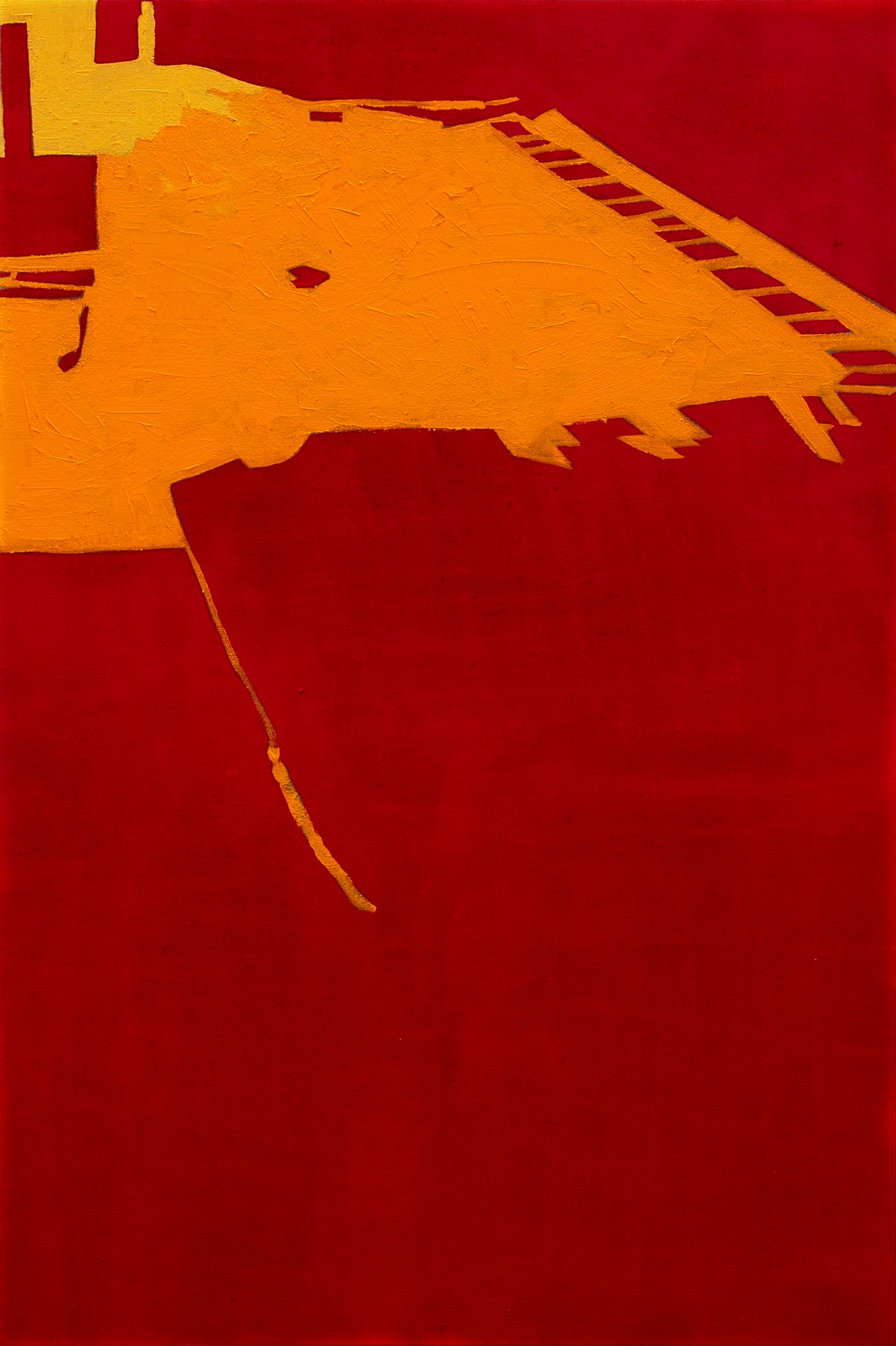
Koen van den Broek, Sunset, 2025, Traffic paint and tar on linen, 150 x 100 cm. Courtesy of the Artist and Jeonnam Museum of Art.
전남도립미술관은 벨기에 화가 쿤 반 덴 브룩(Koen van den Broek, b.1973)의 작업 세계를 조명하는 전시 《지구의 피부》를 개최한다. 건축·공학 교육을 바탕으로 회화로 전향한 그는 지난 25년 동안 도로, 보도, 교차로, 주차장과 같은 도시 기반 구조의 주변부를 집요하게 응시하며, 아스팔트의 균열과 차선, 연석과 그림자가 만들어내는 땅의 표면을 회화의 핵심 주제로 삼아 왔다.
반 덴 브룩은 여행 중 직접 촬영한 사진을 바탕으로, 사진과 영화에서 얻은 프레이밍과 시점을 회화로 번역한다. 윌리엄 에글스턴(William Eggleston, b.1939)으로 대표되는 거리 사진(Street Photography), 앨프리드 히치콕(Alfred Hitchcock, 1899–1980)과 미켈란젤로 안토니오니(Michelangelo Antonioni, 1912–2007)의 영화에서 볼 수 있는 인물 없는 거리와 길가의 장면들은 그의 화면 구성에 중요한 참고점이 된다. 화면 아래로 잘려 나간 차선, 사선으로 가로지르는 보도, 프레임 밖으로 사라지는 그림자와 경계는 특정 장소를 기록하는 동시에 선과 면, 리듬과 색면으로 추상화되며, 폴 세잔(Paul Cézanne, 1839–1906) 이후 구조적으로 조직된 풍경화, 에드워드 호퍼(Edward Hopper, 1882–1967)가 그려낸 고독이 배어 있는 도시와 실내 풍경, 루크 투이만스(Luc Tuymans, b.1958)의 사진 기반 회화가 개척해온 시선의 전통을 잇는 동시에, 그 초점을 자연 풍경에서 도시의 길 위와 가장자리로 옮겨 놓은 독자적인 언어를 형성한다.
기후 위기와 환경 변화를 둘러싼 논의 속에서 땅과 표면의 감각을 새롭게 질문하는 오늘날, 반 덴 브룩이 주목하는 땅의 표면은 장엄한 자연 풍광이 아니라, 마모된 아스팔트와 덧칠된 차선, 비가 스며들어 생긴 얼룩, 균열 사이로 드러난 토양과 같은 미세한 층위에 있다. 그는 실제 도로 공사에 쓰이는 타르와 교통 표지 도료를 캔버스에 사용하기도 하며, 인공적인 재료와 자연 환경이 만나는 접점을 붓질과 물질의 층으로 드러낸다. 이는 사람이 만들어낸 길과 구조물이 지표를 덮고 다시 벗겨지며 남기는 흔적, 즉 ‘지구의 피부’에 새겨진 시간과 힘의 흔적을 읽어내려는 시도로 볼 수 있다.
이와 같은 관점은 한국 미술의 여러 흐름과도 느슨한 공명을 이룬다. 한국 사회에서 땅과 토지는 개발과 산업화, 도시 확장 속에서 끊임없이 선이 그려지고 지워지는 장소였다. 한국의 재개발 구역과 변두리 도로, 공터와 공사장, 주차장과 매립지 주변의 풍경은 자연과 인공이 맞닿는 경계이자, 사회·정치적 힘이 표면에 새겨지는 자리로 인식되어 왔다. 반 덴 브룩의 작업은 이러한 도시 주변부의 장면을 포착하며, 그것을 ‘지표의 회화’로 번역한다.
반 덴 브룩의 회화는 도시의 길과 가장자리를 따라 포착한 장면들을 통해, 우리가 지나쳐온 땅의 얼굴을 새롭게 의식하게 만든다. 이번 전시는 그가 찍고 그려온 길과 가장자리의 이미지를 남도의 해안과 갯벌, 콘크리트 제방과 아스팔트 도로가 공존하는 구체적인 땅 위에 겹쳐 보게 한다. 나아가 인간이 만든 길과 물질이 자연 환경과 만나는 지점에서 드러나는 표면을, ‘지구의 피부’에 새겨진 하나의 단면으로 사유하는 자리를 마련하고자 한다. 반 덴 브룩의 회화는 우리가 무심히 지나치는 지표를 화면의 전면으로 끌어올린다. 그리고 풍경화의 전통을 도시의 기반 시설과 주변부로 확장함으로써, 동시대 미술이 땅의 물질성과 그 위에 축적된 시간의 층위를 어떻게 다룰 것인지에 대한 하나의 방향을 제시하는 질문으로 남을 것이다.
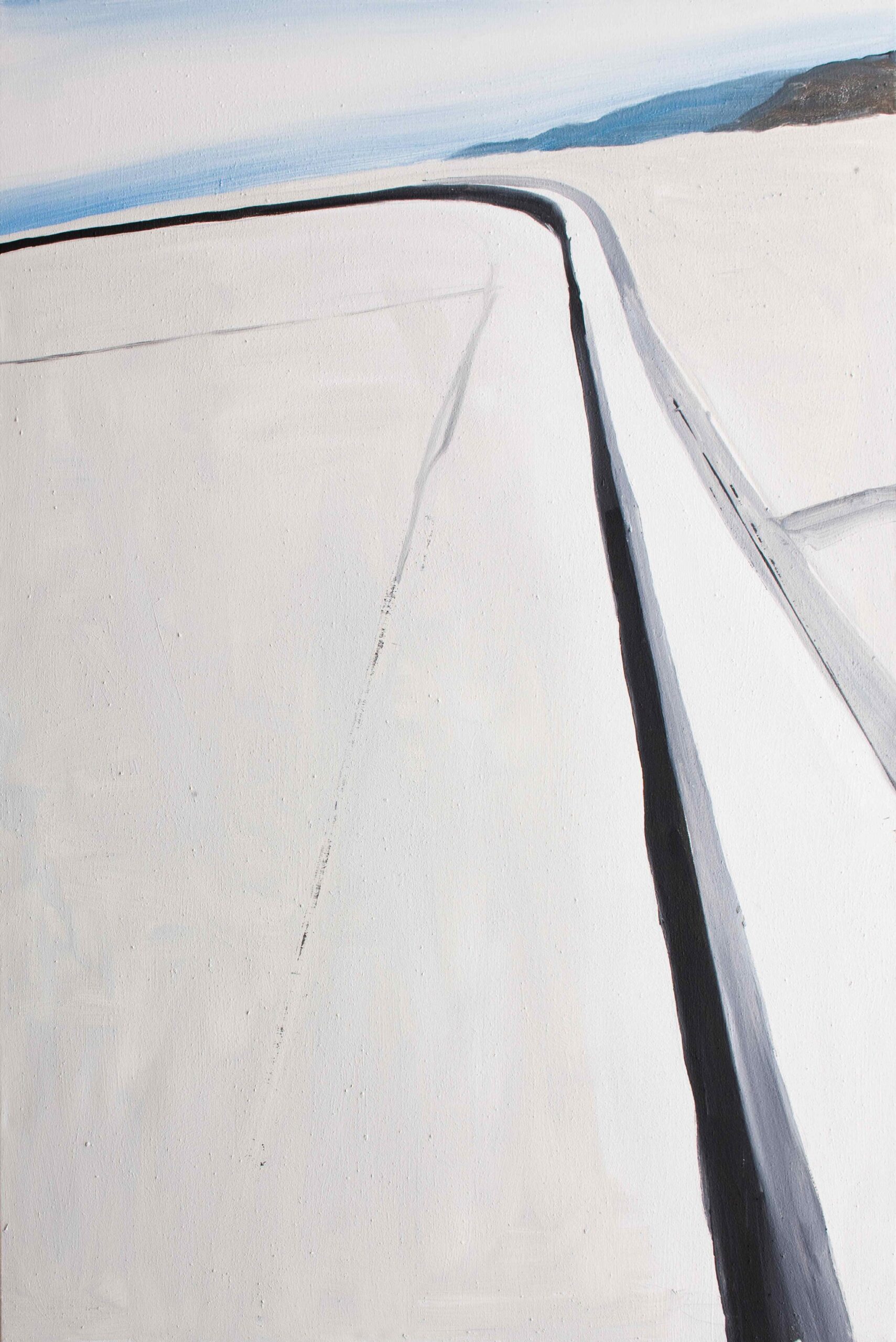
Koen van den Broek, The Edge 3, 2025, Oil on canvas, 180 x 120 cm. Courtesy of the Artist and Jeonnam Museum of Art.
2026. 04. 07. (Tue) – 2026. 07. 19. (Sun)
Jeonnam Museum of Art